A sewer backup during heavy rain often starts with a small pipe most owners never think about. In Palm Harbor, Pinellas County runs a Private Sewer Lateral Program because that pipe is a common weak point.
Key takeaways
- A private sewer lateral is the pipe that carries wastewater from a building to the public sewer system.
- Pinellas County Utilities provides wastewater treatment and sewer maintenance primarily in unincorporated areas of the county.
- In December 2022 the county announced rebates for eligible single family homeowners to inspect and replace or rehabilitate a private sewer lateral.
- The county said the rebates aim to help prevent overflows from heavy rains.
- A backup is Category 3 water, so cleanup includes removal, disinfection and drying.
What a private sewer lateral is
Every building connects to the public sewer through a pipe called a lateral. The part that serves one property is the private sewer lateral.
Because it is underground and out of sight, problems often go unnoticed until water backs up inside the house.
- Cracks and joint gaps let roots and groundwater in.
- Roots can grow through small openings and block the pipe.
- Heavy rain adds flow that an already weak pipe cannot carry.
- A sagging or offset pipe can hold waste and clog.
What the county program does
Pinellas County Utilities provides drinking water, reclaimed water, wastewater treatment and sewer maintenance primarily in unincorporated areas of the county, which includes Palm Harbor.
The county runs a Private Sewer Lateral Program. In December 2022 it announced rebates for eligible single family homeowners to inspect and fully replace or rehabilitate a private sewer lateral.
The county said the rebates aim to encourage owners to fix pipes that carry wastewater to the public sewer system, which helps prevent overflows from heavy rains.
Signs a backup is starting
Backups rarely begin with a flood. They start with small signs that grow when rain arrives.
Catching them early can limit the water that reaches the floor.
- Gurgling sounds from a toilet or tub after the sink drains.
- Slow drains in several fixtures at once.
- Sewage smell near a floor drain or bathroom.
- Water appearing in the lowest tub or shower during rain.
What to do when sewage reaches the floor
Sewage water is Category 3. It contains bacteria and should be treated as a health hazard.
Keep people and pets out of the room, stop using water in the house and avoid flushing.
First steps
Turn off power to affected outlets only if it is safe to reach the panel. Avoid contact with the water and wear gloves and boots if you must enter.
- Stop running sinks, showers and washers.
- Keep children and pets out of the area.
- Photograph the water and the floor before cleanup.
What cleanup involves
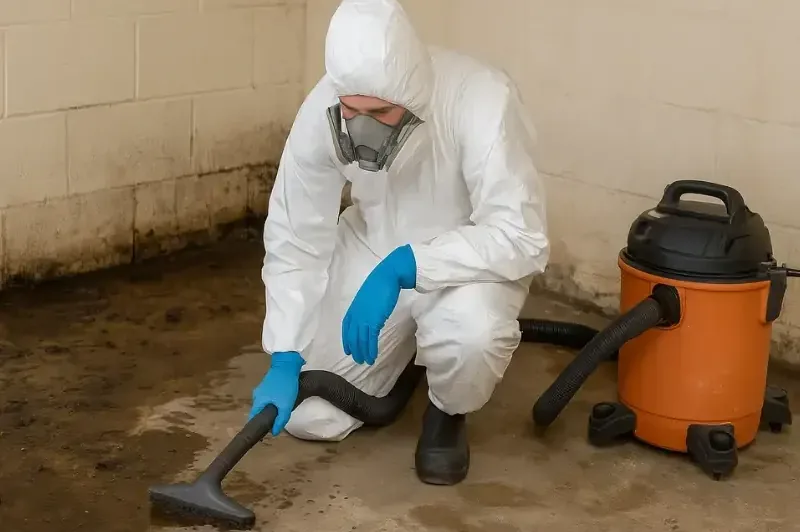
Sewage backup cleanup removes the contaminated water, removes porous materials that touched it and disinfects every hard surface.
Water extraction comes first so contaminated water stops spreading into adjoining rooms.
Floods and large spills in Palm Harbor
Sewer problems are not always on the private side. A 30 inch sewer force main broke at Alderman Road and Omaha Street in Palm Harbor, and residents were asked to limit water use.
After that break Pinellas County said it would remediate private property reached by the spill.
In October 2024, people were evacuated from flooded homes in Palm Harbor. Heavy water events like that put pressure on every sewer connection.
Cleaning a tub or floor drain backup
When a backup reaches the floor, the water has usually soaked into more than the surface. Grout, subfloor, baseboards and the wall base can all hold it.
A proper cleanup works from the drain outward, so contamination is not pushed into clean areas.
- Standing water is extracted first.
- Porous materials that touched sewage are removed.
- Hard surfaces are washed and then disinfected.
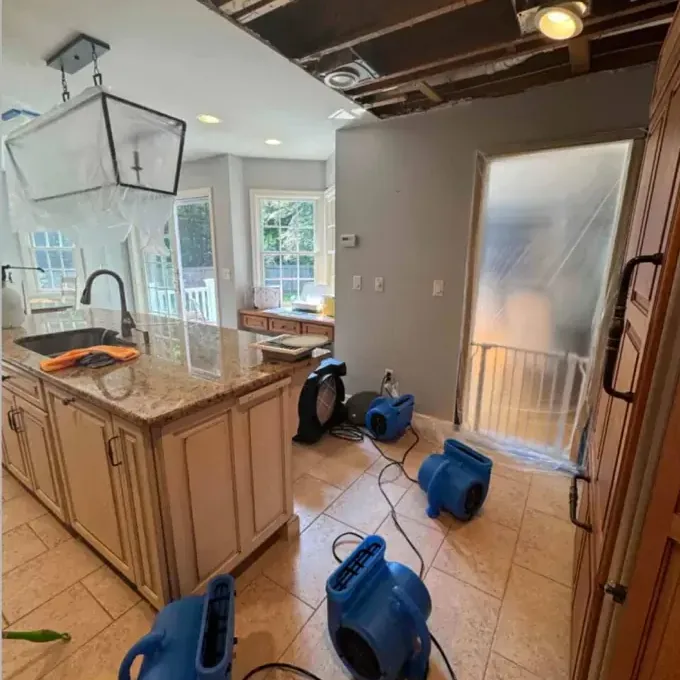
- Drying equipment runs until readings show the structure is dry.
- Odors are checked at the end to confirm the source is gone.
What not to do after a backup
A few common reactions make a backup harder to clean.
The right move is to stop adding water, limit contact and let the pipe be checked.
- Do not keep flushing to test the drain.
- Do not run the washer or dishwasher.
- Do not mix household chemicals to clear the pipe.
- Do not mop with a regular mop and reuse it in clean areas.
Records for the county and the insurer
A backup that traces to the private side of the pipe is a different conversation than one that traces to a county main.
Written records make that conversation easier, and they help whoever is deciding what a policy or program covers.
A local crew that handles sewer backup restoration for homes in the area can supply photos, readings and a list of removed materials.
- Photograph the drain, floor and any visible waterline.
- Keep the camera inspection report if one is done.
- Save notes from any call with the county.
Heavy rain and older pipes
Heavy rain puts extra water into the sewer system. Pipes that are cracked or sagging let rain water in, and the added flow can overload the lateral.
That is why the county ties lateral repair to preventing overflows from heavy rains.
A backup during a storm is often the first sign that the pipe needs inspection.
- Ask for an inspection after any backup.
- Mention the date and weather of the backup.
- Keep the report for later repairs.
How to find a lateral problem
A plumber can inspect a lateral with a camera and report cracks, roots and sags. That inspection is what the county rebate program is designed to support for eligible homes.
Fixing the pipe stops repeat backups. Cleaning the floor does not.
- Ask for the camera video so the problem can be seen.
- Keep the report for any county or insurance conversation.
- Ask whether the pipe needs a repair or a full replacement.
Questions
What is a private sewer lateral?
It is the pipe that carries wastewater from a building to the public sewer system. The part serving one property is the private lateral.
Does Pinellas County help with laterals?
Pinellas County runs a Private Sewer Lateral Program. In December 2022 it announced rebates for eligible single family homeowners to inspect and replace or rehabilitate a lateral.
Why do backups happen during heavy rain?
Rain adds flow and groundwater to a system, and a cracked or blocked lateral cannot carry it. The county said fixing the pipes helps prevent overflows from heavy rains.
Is sewage water dangerous?
Yes. It is Category 3 water that contains bacteria, so porous materials are removed and surfaces are disinfected.
Who handles county spills on private property?
After the Alderman Road and Omaha Street force main break, Pinellas County said it would remediate private property reached by the spill.