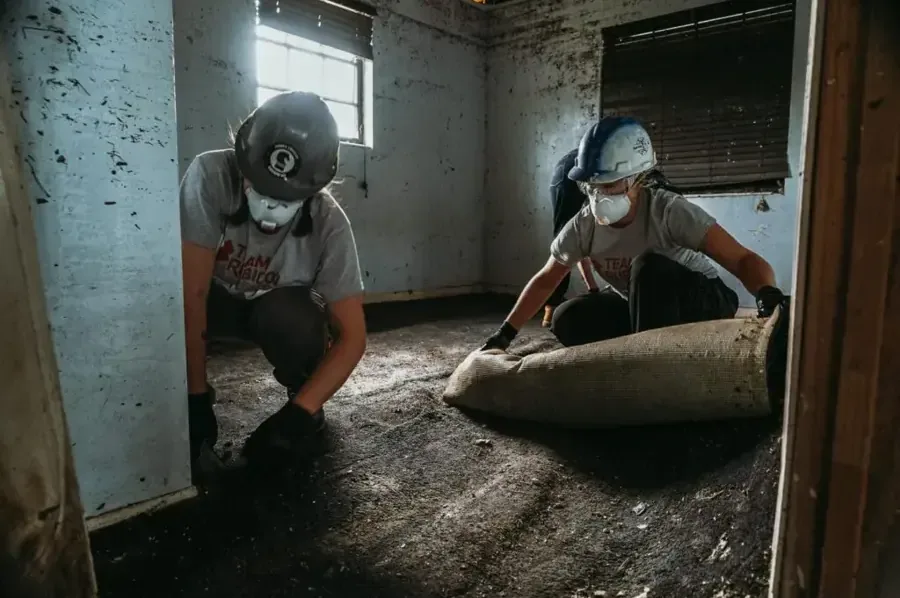
Flooding from Hurricane Helene in late September 2024 forced evacuations at the Gardens of Beacon Square condominium complex. For owners of a flooded unit, the weeks after the water leaves set up everything that follows.
Key takeaways
- Hundreds of Pasco County neighborhoods were taken over by Gulf water during Helene, and the Gardens of Beacon Square complex was evacuated.
- Condo owners should photograph and list damage before any material is removed.
- Drying and removal should not wait for a repair schedule, because wet materials keep absorbing moisture.
- Some owners could use the association's contractor or hire their own, and units outside the association's contractor first had to reach a partly finished white box stage.
- Management told residents repairs could take up to a year, so a written record matters.
What happened at Gardens of Beacon Square
FOX 13 reported on September 26, 2024 that hundreds of Pasco County neighborhoods were taken over by Gulf water during Helene, in some places more than four feet higher than an earlier storm.
At the condominium complex, flooding forced evacuations. Tampa Bay 28 reported in July 2025 that hundreds of displaced residents were still waiting to return, about a year after the storm.
Condo management told residents after Helene that repairs could take up to a year. That timeline shaped the choices owners made.
Document the unit before removal
A condo claim often involves the owner, the association and an insurer, so clear records help every party.
Record what the water reached before drywall, flooring and contents are taken out.
- Photograph every room, including the waterline on walls and cabinets.
- List furniture, appliances and personal items that were damaged.
- Keep copies of messages from the association about repair plans.
- Save receipts for any emergency work, storage or temporary housing.
Why drying cannot wait on the repair schedule
A long repair timeline does not slow the water. Wet drywall, insulation and flooring keep holding moisture until they are removed and the structure is dried.
The longer a unit sits wet, the more material needs to be replaced and the more the cost rises.
Storm surge and flood cleanup starts with removing contaminated water and wet porous materials, then moves to drying.
- Surge water is treated as contaminated, so porous materials are removed.
- Open wall cavities dry faster than closed ones.
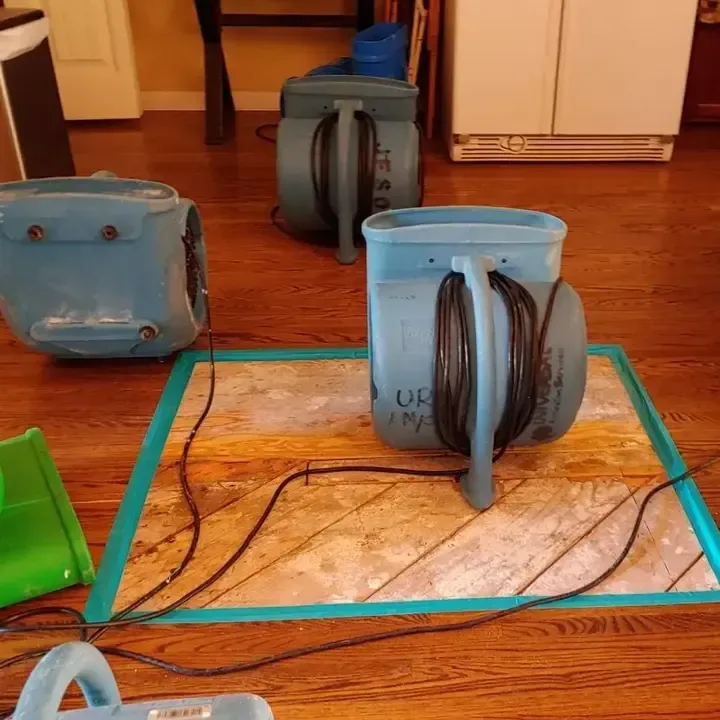
- Drying equipment runs until moisture readings reach a dry standard.
Association contractor or your own
Some owners could use the condo association's contractor or hire their own. The choice carries tradeoffs.
An association contractor may keep the building on one schedule. An owner contractor can start work sooner on a single unit.
Questions to ask before choosing
Ask the association what work it covers and what work stays with the owner.
Ask how moisture readings will be recorded and shared.
- Does the association contractor cover the whole unit or only shared components?
- Who pays for drying and for equipment rental?
- What happens if the unit is dry but the building schedule is not ready?
The white box stage
Units outside the association's contractor first had to reach a partly finished white box stage. That means the unit is cleared of damaged finishes and left with clean, dry framing and walls.
Structural drying is what gets a unit to that stage, so it makes sense to treat it as a priority.
Debris and cleanup help from the county
Pasco County offered debris drop off and pickup in flooded neighborhoods after Helene. Owners hauling out ruined drywall, flooring and furniture used that service.
Bagging wet materials, labeling them by room and keeping them separate from household trash makes the process easier for everyone.
Moisture readings and shared records
In a condo, one unit can affect the next. Shared walls, shared floors and shared ceilings mean a wet unit is rarely a private problem.
Moisture readings give everyone the same facts. A reading from a wall base or subfloor shows whether drying is finished or whether a unit still holds water.
- Ask for readings taken before drying begins and after it ends.
- Keep dated photos of equipment placement and room conditions.
- Share the final readings with the association and the insurer.
- Ask for a plain list of what was removed and what was left in place.
Living with a long repair timeline
When repairs are expected to take up to a year, a unit that is dry and clean is a better place to wait than one that is damp and closed up.
Even a unit that is not being rebuilt yet can be checked every few weeks to be sure nothing has changed.
A short visit to look for new stains, smells or damp spots can catch a problem early, and a crew that handles condo water damage restoration can explain what each reading means.
Why neighboring units matter
A wet unit that sits untreated can pass moisture along shared framing and ceilings.
That is why the association, the owner and the restoration crew should agree on a drying plan early, even when the full rebuild is months away.
A structural drying plan that covers the whole affected area, not just one room, keeps the repair smaller for everyone.
- Report damp walls on shared boundaries right away.
- Keep access open so readings can be taken in adjoining units.
- Ask that equipment be tracked by room so progress is easy to see.
Questions for the insurer and the association
Owners often deal with two parties at once, and the answers do not always match.
Writing down who said what, and when, avoids confusion later.
- What does the association policy cover, and what stays with the owner?
- Who decides which contractor can enter a unit?
- What proof of drying is needed before rebuilding starts?
- How will additional damage found later be handled?
What owners can do while waiting
A unit that is clean and dry is far better off than one that is waiting. Even months after the storm, the steps are the same.
If a unit has not been dried, a moisture check can show whether framing and subfloor still hold water.
- Ask for moisture readings in writing.
- Keep the unit ventilated and the power safe if work resumes.
- Report any new stains or smells to the association promptly.
- Keep a dated log of every conversation about repairs.
Questions
Why were Gardens of Beacon Square residents evacuated?
Flooding from Hurricane Helene in late September 2024 forced evacuations at the Gardens of Beacon Square condominium complex.
How long were repairs expected to take?
Condo management told residents repairs could take up to a year, and in July 2025 hundreds of displaced residents were still waiting to return.
Can an owner hire their own contractor?
Some owners could use the association's contractor or hire their own. Units outside the association's contractor first had to reach a partly finished white box stage.
What is a white box stage?
It is a partly finished stage where damaged finishes are removed and the unit has clean, dry framing and walls, ready for rebuilding.
Why dry a unit if repairs are months away?
Wet drywall, insulation and flooring keep holding moisture and can spread damage. Drying stops that, whatever the repair schedule.