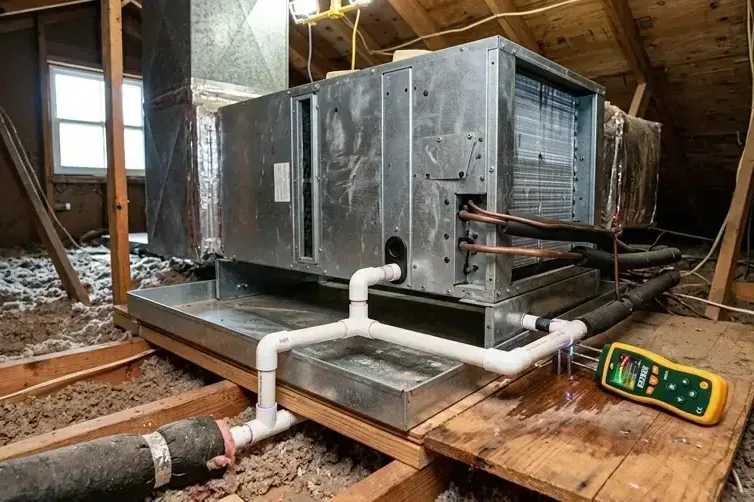
In Holiday the air conditioner runs almost all summer, and it pulls a lot of water out of humid air. When the drain clogs, that water has to go somewhere, and it often ends up in a closet, a ceiling or a floor.
Key takeaways
- Rainy season runs from June to September, with about 7.8 inches a month and about 60 percent of annual rainfall.
- An air conditioner removes moisture from the air and sends it out through a condensate drain.
- A clogged drain or full pan sends the water into a closet, ceiling or floor.
- Attic units can soak insulation and drywall before a stain is seen.
- Turning off the system at the thermostat and the breaker stops the water.
Why the rainy season makes it worse
The Southwest Florida Water Management District reports that the rainy season runs from June to September, with about 7.8 inches a month and about 60 percent of annual rainfall.
Humid air holds a lot of water, and the air conditioner turns that moisture into liquid at the coil. The more the system runs, the more water it produces.
- Longer run times mean more condensate.
- Algae and slime grow in warm, wet drain pipes.
- Dust and debris collect in the drain pan.
- A small clog can become a full blockage within a season.
How the drain system works
Condensate collects in a pan under the coil and flows out through a drain pipe. The pipe leads outdoors or to a drain.
If the pipe clogs, the pan fills. If the pan fills and no safety switch stops the system, the water overflows.
Closet units
Water from a closet unit spreads across the floor and into the wall base. It can reach the next room before anyone notices.
Attic units
Water from an attic air handler soaks insulation first. It then moves into the ceiling below, where a stain or sag shows up.
- Brown stains on a ceiling near a vent.
- Drywall that feels soft or looks wavy.
- Dripping near light fixtures.
Signs of a leak
A drain leak often starts slowly. The earlier it is found, the less material is affected.
A floor that stays damp near the unit, or a musty odor in the closet, are both common clues.
- Water in the drain pan or around the unit.
- A wet spot on the ceiling below an attic unit.
- Warped baseboards near an air handler closet.
- An air conditioner that shuts off by itself.
What to do right away
Turn the system off at the thermostat and at the breaker so it stops producing water. Then remove standing water with towels or a wet vacuum.
Take photos of the affected area before cleanup starts.
- Turn off the AC at the thermostat and the breaker.
- Remove standing water from the pan and floor.
- Move items away from the wet area.
- Call an AC technician to clear the drain.
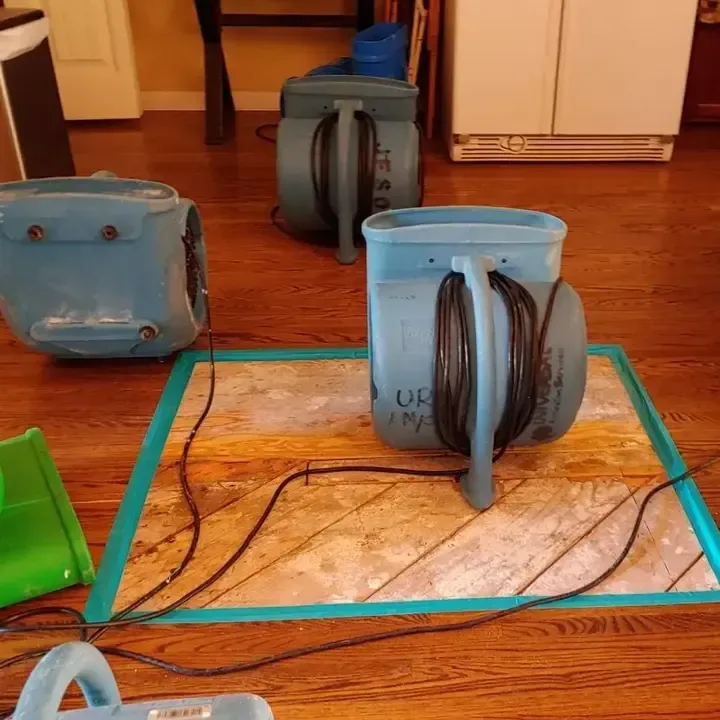
How restoration handles it
An AC leak water damage job starts with finding where the water went. Moisture meters and a thermal camera show wet drywall and insulation that cannot be seen.
If the water reached a ceiling, ceiling leak water damage work opens the affected area, removes wet insulation and dries the joist bays.
Wet flooring is handled next, since floor and carpet water damage spreads along seams and under baseboards.
What an AC technician and a restoration crew each do
An AC leak has two parts, and each needs a different specialist.
The technician fixes the cause. The restoration crew deals with the water that already left the system.
- The technician clears the drain, checks the pan and sets safety switches.
- The restoration crew locates wet materials and removes standing water.
- Drying equipment is set to pull moisture from walls, insulation and floors.
- Moisture readings confirm the area is dry before repairs begin.
Why waiting makes it worse
A slow drain leak seems minor, but wet drywall and insulation do not dry in a humid house.
During the rainy season, humid air slows drying even more.
A small closet stain can turn into a wet wall base, a soft floor and a stained ceiling in the next room.
- Wet insulation loses its value and holds water against the ceiling.
- Baseboards and drywall wick water upward from the floor.
- Flooring edges cup or lift as moisture spreads.
Checking closets, ceilings and floors
After any AC overflow, check three places.
This takes only a short time and shows how far the water went.
- The closet or utility room floor around the air handler.
- The ceiling below an attic unit, especially near vents and light fixtures.
- Baseboards and flooring in rooms next to the unit.
Drying after the leak
Once the source is fixed, drying begins. Air movers push air across wet surfaces and dehumidifiers pull moisture from the air.
Readings show when it is safe to close walls and put flooring back, and in a humid climate that step matters even more than elsewhere.
What owners can watch for each week
A short weekly habit during the rainy season catches problems before a leak starts.
The checks take little time and need no tools.
- Look at the drain outlet outside to see that water is dripping steadily.
- Open the closet door and look at the floor near the unit.
- Listen for the unit shutting off early or running without cooling.
- Check ceilings under an attic unit for new spots after a storm.
- Note any musty smell near vents.
Small habits that protect the ceiling
Most AC overflows are slow. A system that has run for months with a partly clogged drain can fail on the hottest, wettest week of the year.
Replacing a worn filter and keeping the area around the air handler clear helps the whole system run cooler and wetter less often.
If an attic unit sits above a bedroom or hallway, a drain pan with a shutoff switch gives a second layer of protection, because the switch stops the system before water reaches the ceiling.
A homeowner who keeps a short note of when the drain was last cleared will know when it is time to do it again.
Preventing the next overflow
A little maintenance goes a long way. A regular drain flush and a float switch on the pan are simple steps.
Checking the pan and drain before the rainy season starts catches problems before the system runs hard.
- Flush the drain line on a schedule.
- Add a float switch to the pan.
- Check the closet or attic after storms.
- Keep the area around the unit clear.
Questions
How much rain does the rainy season bring?
The rainy season runs from June to September, with about 7.8 inches a month and about 60 percent of annual rainfall, according to the water management district.
Why does an AC unit leak water?
It removes moisture from humid air and sends it out through a condensate drain. When the drain clogs, the water overflows the pan.
Where does the water usually go?
Into the closet floor for a closet unit, or into insulation and the ceiling for an attic unit.
What should I do first?
Turn the system off at the thermostat and the breaker, remove standing water and take photos.
Can a ceiling stain be from an AC drain?
Yes. An overflowing pan in the attic can soak insulation and drywall and show up as a stain below.